
Getting found online used to mean ranking on Google. Today, many people ask ChatGPT, Gemini or Google AI Overviews instead of scrolling through links. That’s why GEO now sits next to SEO. In this guide, you’ll learn what each one means, how they differ, and why your website needs both.
What Is SEO?
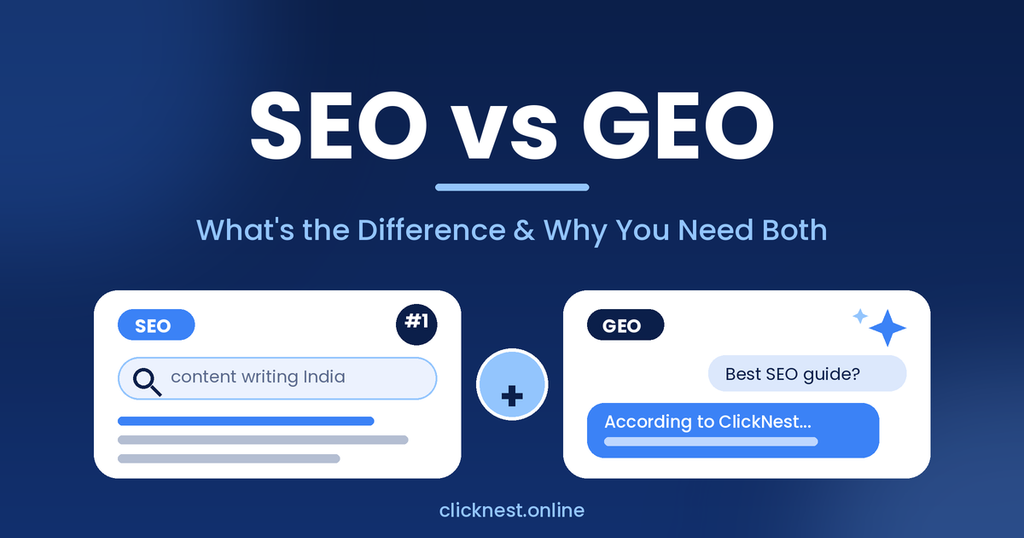
SEO (Search Engine Optimization) is the practice of improving your website so it ranks higher on search engines like Google and Bing. When someone searches “content writing services in India,” SEO helps your page earn a top spot.
It covers keyword research, on-page optimization (titles, headings, meta descriptions), technical health (speed and mobile-friendliness) and backlinks. The goal is simple: rank high and earn clicks.
What Is GEO?
GEO (Generative Engine Optimization) is the practice of making your content easy for AI tools like ChatGPT, Gemini and Perplexity to understand, trust and quote.
These tools don’t just list websites. They read many sources and write a direct answer. The goal of GEO is to get your brand or content included in that answer.
SEO vs GEO: Key Differences
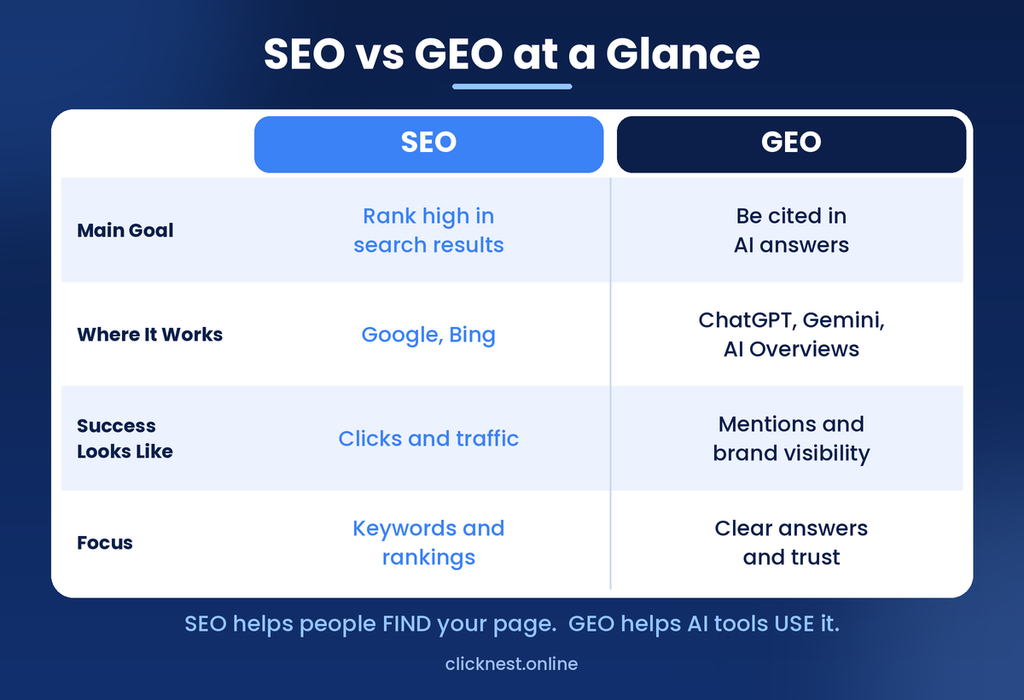
| SEO | GEO | |
|---|---|---|
| Goal | Rank in search results | Be cited in AI answers |
| Where | Google, Bing | ChatGPT, Gemini, AI Overviews |
| Success | Clicks and traffic | Mentions and brand visibility |
| Focus | Keywords and rankings | Clear answers and trust |
In short, SEO helps people find your page, while GEO helps AI tools use it.
Why Your Website Needs Both
GEO doesn’t replace SEO. Here’s why you need both:
- They support each other. AI tools often draw on content that already ranks well and is trusted.
- Your audience uses both. Some people search on Google, others ask AI. Optimizing for one means losing the other group.
- Both reward quality. Helpful, accurate content works for search engines and AI alike.
- It’s an early advantage. GEO is still new, so starting now puts you ahead of competitors.
How to Optimize for Both
- Answer questions directly. Give a clear answer in the first one or two sentences of each section.
- Use clear headings. Question-style headings like “What Is GEO?” help machines understand your page.
- Add an FAQ section. Short Q&As are easy for Google and AI tools to quote.
- Publish original content. Real examples and experience build trust.
- Build authority. Keep a clear About page and earn mentions on trusted websites.
- Fix technical basics. Fast loading, mobile-friendly design, meta descriptions and schema markup all help.
- Stay consistent. Describe your brand the same way everywhere online.
Frequently Asked Questions
Is GEO replacing SEO?
No. GEO builds on SEO. Search engines remain a major traffic source, and good SEO supports your visibility in AI answers too.
What does GEO stand for?
Generative Engine Optimization: optimizing content so AI tools can understand it and include it in their answers.
Can small websites do GEO?
Yes. Clear, helpful content and a trustworthy online presence matter more than budget.
Final Thoughts
SEO helps your website get found on search engines. GEO helps it get mentioned by AI tools. Both come down to the same principle: create clear, helpful, trustworthy content for real people.
Want help improving your visibility? Explore our SEO Services and let ClickNest help your website get found by search engines and AI alike.